
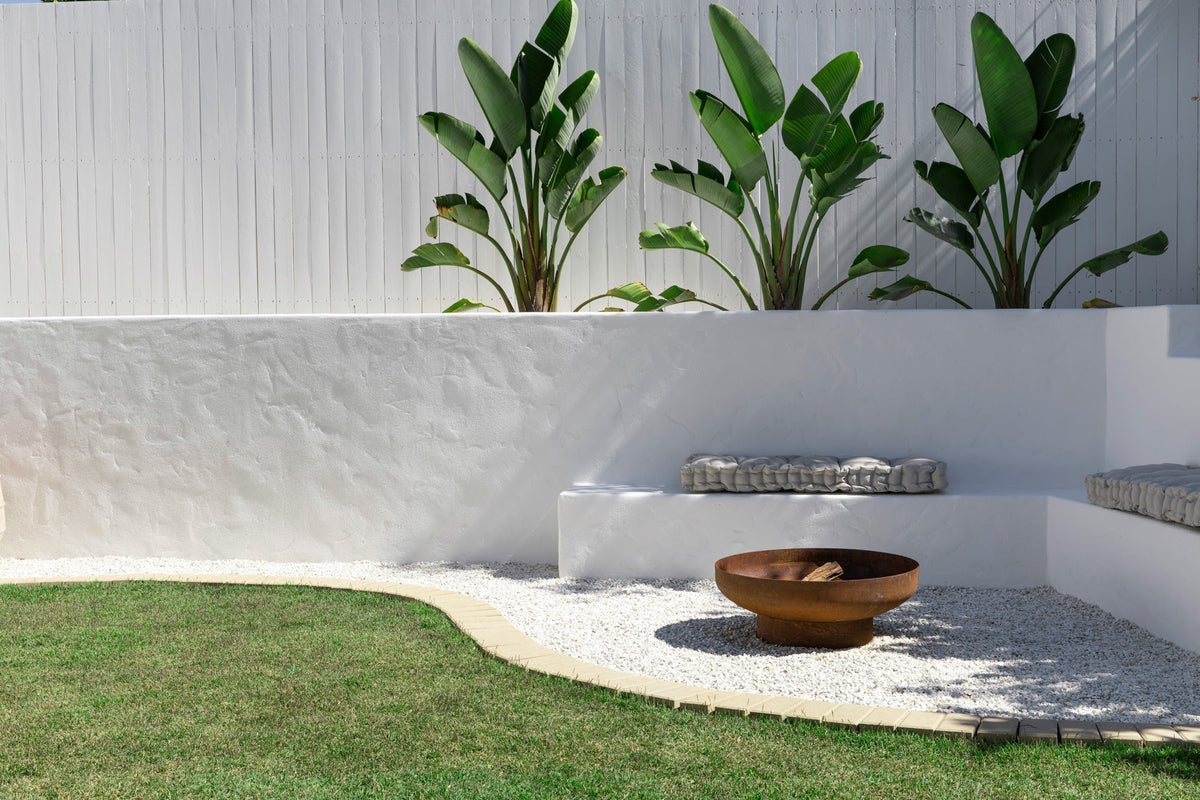
There’s a certain appeal to gathering around an open flame in the backyard, but before you commit to buying one, it’s worth understanding what actually makes a good fire pit, and which type suits your space.
People often ask whether they can repurpose something they already own - a metal bowl, a washing machine drum, a planter - and the honest answer is that some of these work, but most come with real trade-offs. Here’s a practical look at your options, so you can make a decision you’re happy with for years to come.
DIY and repurposed options
If you’re looking for a quick, low-cost solution for a single occasion, some DIY approaches can work in a pinch.
Galvanised steel tubs and drums:
are commonly used as makeshift fire pits. They’re heat-resistant and widely available. The drawback is that they’re rarely designed with drainage, airflow or stability in mind, which affects how well the fire burns and how safely it sits on uneven ground.
Washing machine drums:
have become a popular option in certain circles. The perforated steel allows good airflow and the drum shape holds heat well. They can work, but the finish degrades quickly outdoors, they’re heavy to move, and they’re not exactly designed to be a feature of your entertaining space.
Terracotta pots and concrete planters:
are generally not suitable for burning wood. They’re not built to handle sustained, intense heat and can crack or fracture unpredictably.
The common thread across most DIY options is that they’re a workaround, not a solution. They tend to corrode quickly, sit awkwardly in a backyard setting, and rarely improve with age.
What to look for in a purpose-built fire pit

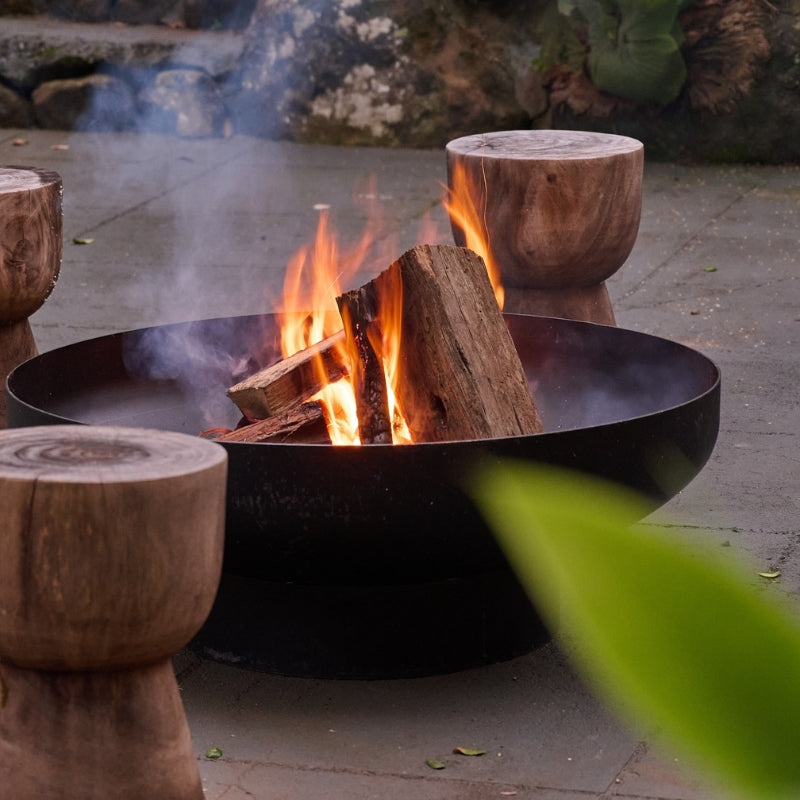
A well-designed fire pit does a few things a repurposed container can’t. It manages heat distribution, maintains structural integrity over time, and importantly looks the part in an outdoor space you’ve put effort into.
When you’re weighing up your options, here’s what matters:
Material and thickness:
Steel fire pits built with 3–4mm walls and a thicker base (up to 10mm where heat is most intense) hold up well to repeated use. The base takes the brunt of the heat, so this is where quality really counts.
Finish:
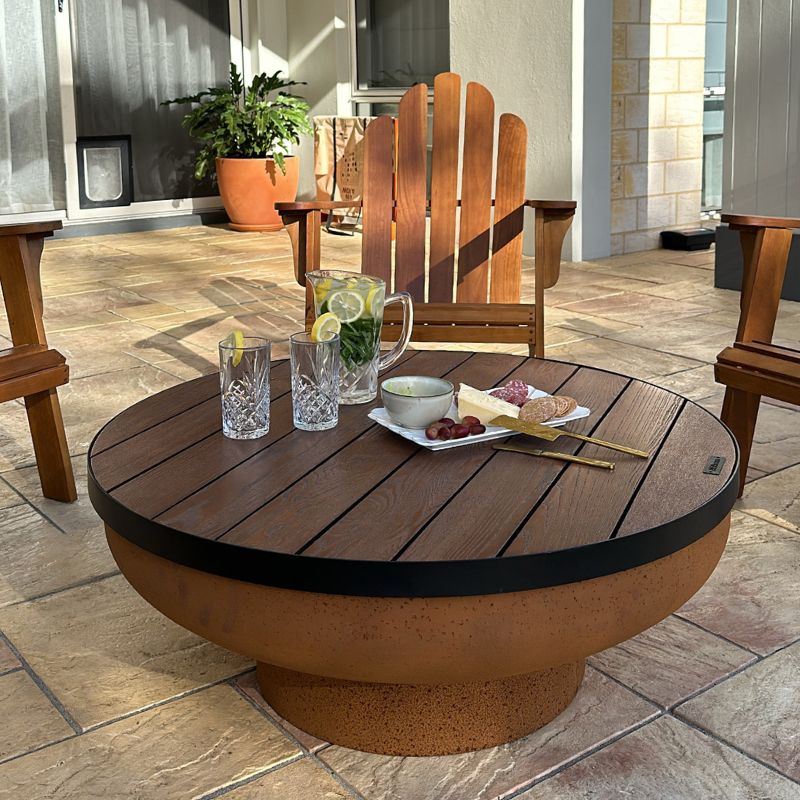
Rust and black are the two most common choices. A rust finish develops natural character over time and is low maintenance - it’s part of the look rather than a sign of deterioration. Black works well with contemporary outdoor settings and dark hardware.
Size:
Bowl width is the key measurement. A 70cm pit suits a mid-sized entertaining area comfortably. A 90–100cm model creates more of a centrepiece and suits larger groups. If you’re after something you can take camping or move around easily, a 50–70cm portable design is the practical choice.
Low smoke vs. open flame:
Traditional open flame pits burn wood and produce the classic crackle and ember glow most people are after. Low smoke designs use a secondary combustion chamber to burn off gases before they escape, which significantly reduces smoke output - a meaningful difference if you’re in a residential area or have close neighbours.
Four fire pits worth considering
Phoenix - the reliable everyday option
 The Phoenix is a clean, bowl-style fire pit available in 70cm, 80cm and 90cm sizes, in both rust and black. It’s a versatile choice that suits most backyards and doesn’t try to do too much - it just does its job well.
Tucson - the entertainer’s choice
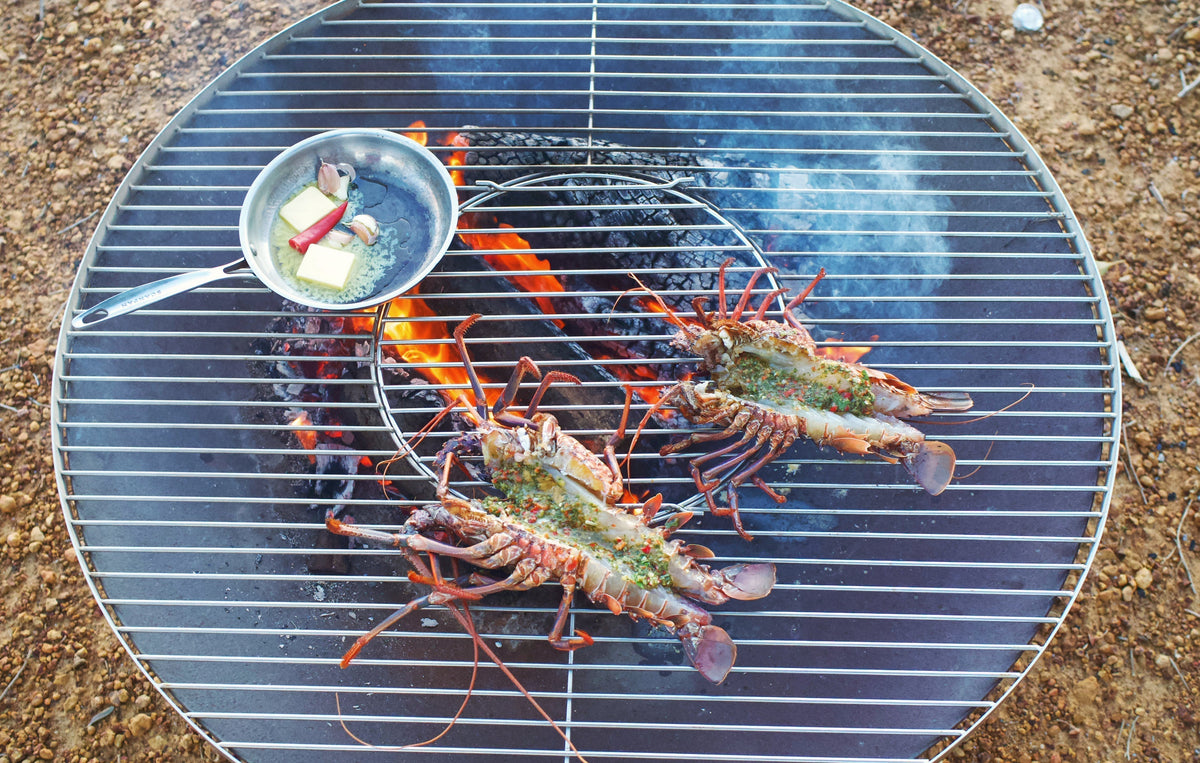
 The Tucson steps up in presence, with a wider bowl shape available in 80cm, 90cm and 100cm. It’s designed with entertaining in mind — the larger surface area means more room for a grill, a timber tabletop, or simply a bigger flame that anchors a seating area.
Montana - when size is the statement
 If you want a fire pit that genuinely stops people in their tracks, the Montana 100 is it. At 100cm, it’s one of the larger options in the range and it earns its place in a substantial outdoor space. Available in rust and black, it’s the kind of piece that defines an outdoor area rather than just adding to it.
Sahara - for low smoke entertaining
 The Sahara is a different proposition. It uses a double-wall combustion design that dramatically reduces smoke, making it a genuinely practical choice for built-up areas, smaller backyards, or anywhere neighbours are close. The stainless steel version in particular has a refined, contemporary look that suits more modern outdoor settings.
What should you actually use?
If the occasion is casual and once-off, a repurposed drum or tub can get the job done. But if you’re setting up an outdoor space you’ll actually use; and you want something that looks right, burns well, and doesn’t need replacing in two years, a purpose-built fire pit is the better investment by a clear margin.
The range in price and size means there’s a genuine entry point for most budgets, and the difference between a dedicated fire pit and an improvised alternative is noticeable from the first use.
Explore the full fire pit range.

Leave a comment
This site is protected by hCaptcha and the hCaptcha Privacy Policy and Terms of Service apply.